

1. High efficiency: Under a given current density, the conversion efficiency of hydrogen production through electrolysis of water can be improved several times, with low energy consumption and fast speed.
2. High concentration: Ozone, residual chlorine, hydrogen peroxide, and other substances generated during the electrolysis process can be discharged to obtain extremely high purity hydrogen.
3. Safer: Precision components can withstand large pressure differentials, simplifying pressure control and ensuring safe operation.
4. Pollution free: The electrolyte is a chain compound with stable performance and no corrosive liquids present, avoiding secondary pollution of water quality.
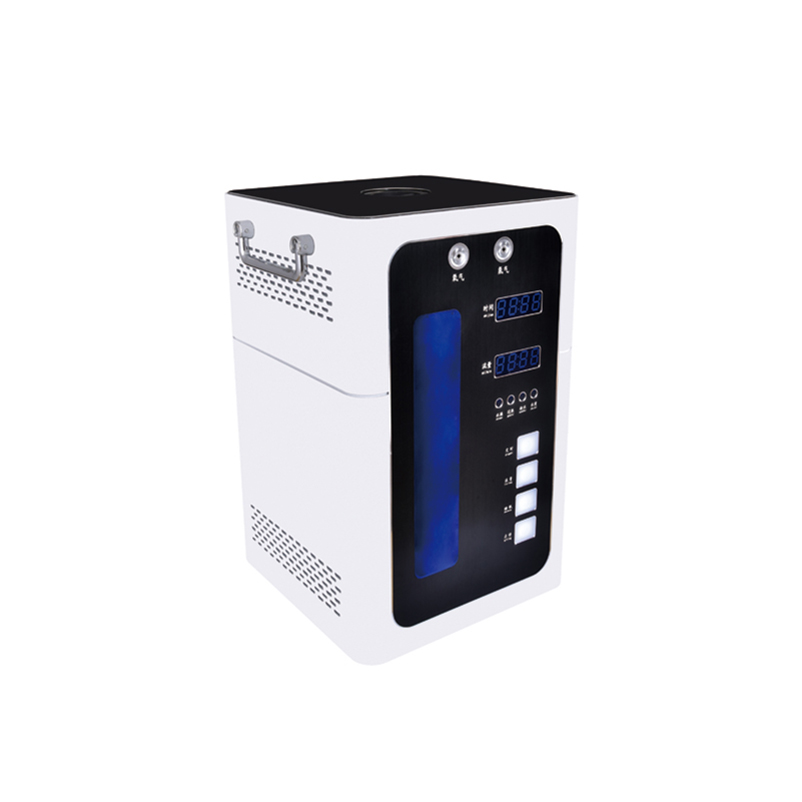
5. Long lifespan: Embedded rechargeable lithium batteries have a long service life.
It is one of the kitchen water appliances of the 21st century and one of the four most leading household appliances in the future. By utilizing pre filtration and core electrolysis technology, residual chlorine, impurities, and heavy metals in tap water are removed from the source. Convert tap water that needs to be boiled for drinking into electrolyzed reduced water that meets the International Health Organization's good water standards. It can be consumed directly and is more in line with human needs than tap water. It can regulate bodily functions and improve sub-health. Internationally recognized, it has outstanding basic adjuvant therapy effects on some diseases.
Why has electrolyzed water become one of the essential daily necessities in every household nowadays? Because hydrogen rich water can improve people's physical fitness, eliminate sub-health, and have a certain auxiliary effect on the treatment of various diseases!
The process of direct current electrolysis of water (H2O) to produce hydrogen and oxygen is called electrolysis of water. When current passes through water (H2O), hydrogen (H2) is formed at the cathode by reducing water.
At the anode, oxygen (O2) is formed by oxidizing water, and the amount of hydrogen generated is about twice that of oxygen. Then, some of the decomposed hydrogen and oxygen will dissolve into the water, increasing the hydrogen content in the water, resulting in hydrogen rich water