

1. During electrolysis, hydrogen gas is produced separately and dissolved into water under pressure by tightly sealing the cup lid, forming several clusters of water that gather together. At this point, the shape of the clusters of water becomes larger, and hydrogen molecules always gather into small bubbles between water molecules. Over time, the hydrogen gas formed in this situation aggregates into large bubbles that are easily released into the air.
2. There is also a type of hydrogen rich water cup that is divided into two poles for electrolysis. After the separation of H+and O2 generated by the anode, H+transmits ion potential and generates H2. The water in the cup is electrolyzed into the smallest unit of small molecule cluster water, making it into pentagonal or hexagonal water shape. At the same time, hydrogen gas attaches to each corner and combines into one, forming hydrogen rich water. Hydrogen gas that is not bound to the structure of water molecules converges into bubbles and is released into the air. Dissolved hydrogen retention time: Under normal conditions at 15 ℃, 80-90% retention occurs after 12 hours, and 60-80% retention occurs after 24 hours, with a maximum retention time of 72 hours or more.
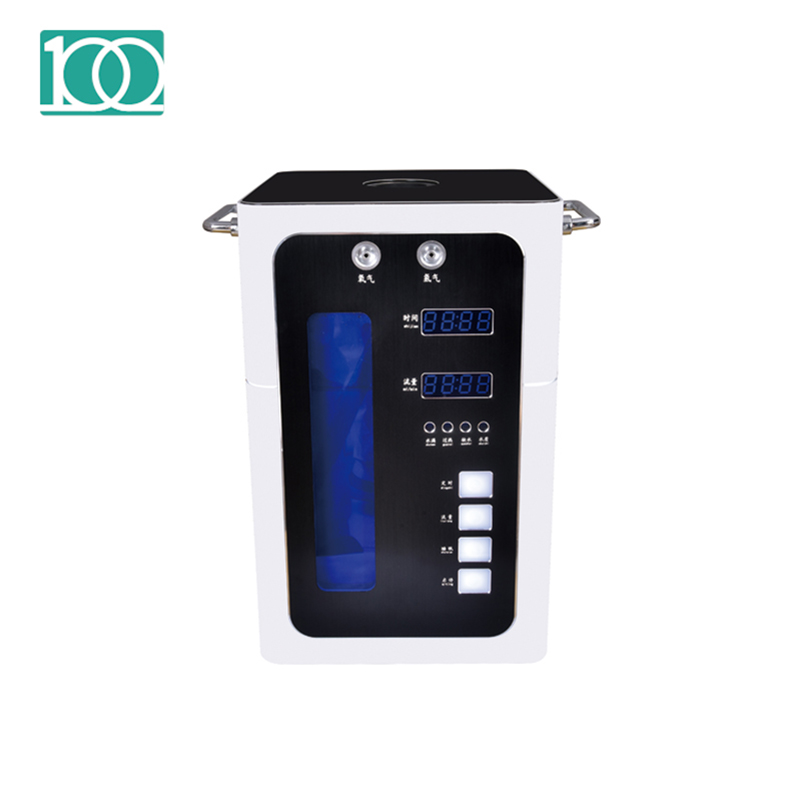
A hydrogen rich water cup is a device for generating hydrogen rich water
By using electrolysis technology to convert water into electrolyzed reduced water, hydrogen gas is produced.
Rich hydrogen water can improve sub-health and have auxiliary therapeutic effects on some diseases.
Hydrogen has been rapidly researched in recent years, with over 300 related papers published in just five years since 2007.
After extensive research, it has been proven that hydrogen has certain auxiliary therapeutic effects on various diseases. Therefore, products related to hydrogen have begun to appear on the market, and hydrogen rich water cups are one of the effective simple portable devices for electrolyzing hydrogen.